Create a Polished Wholesale Line Sheet in Minutes
Standing out in a competitive market requires more than just a great product; it requires professional presentation. When you approach a retailer or a potential wholesale client, your first impression is often a static PDF or a messy email. This is where a structured approach changes the game. By utilizing Editable Line Sheet Templates, you bridge the gap between a creative idea and a polished commercial offer. These templates serve as the foundation for your brand's wholesale strategy, ensuring that your pricing, product descriptions, and imagery are organized in a way that speaks directly to buyers.
The Anatomy of a Professional Catalog
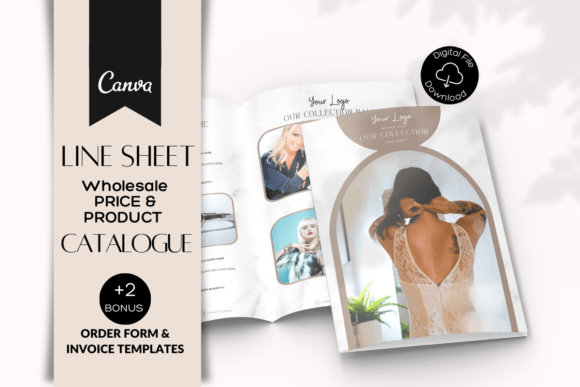
A line sheet is fundamentally different from a standard lookbook or a social media post. It is a functional document designed to facilitate sales. The layout of these wholesale templates prioritizes clarity over artistic abstraction. You will notice that the visual hierarchy is carefully constructed to guide the buyer’s eye. Typically, the most prominent elements are the product photography and the pricing structure. The typography used in these templates usually favors sans serif fonts for body text to ensure maximum readability, often paired with a clean display font for headers. This combination creates a modern, professional aesthetic that conveys trust and reliability.
One of the primary strengths of using a pre-designed structure is the ability to maintain visual consistency. In editorial design, consistency is key to brand recognition. These templates allow you to apply your specific brand identity across multiple pages without having to manually align text boxes or resize image placeholders every time. Whether you are showcasing a single collection or a full range of products, the template ensures that the spacing, margins, and alignment remain uniform. This attention to detail in packaging design and presentation signals to retailers that you are a serious business partner who values organization.
Customization for Your Brand Identity
While the structure is pre-built, the creative control remains entirely in your hands. The ability to edit photos, text, and colors is crucial for maintaining a cohesive brand identity. You are not forced to use a generic typeface that clashes with your logo. Instead, you can modify the font sizes and styles to match your existing marketing materials. If your brand relies on a modern typography style, you can swap out the placeholder text for a premium font that better reflects your aesthetic. This flexibility is essential for designers and entrepreneurs who need their wholesale materials to feel like a natural extension of their website or social media graphics.
Furthermore, the ability to duplicate and rearrange pages allows for scalability. A small business owner launching their first product might only need two pages, whereas an established brand with multiple SKUs might need twenty. The templates accommodate this growth. You can adjust the layout to feature long & short product descriptions, ensuring that each item receives the specific attention it deserves. This adaptability makes the templates a long-term design asset rather than a one-time use file. You can refine your visual hierarchy as your product line expands, ensuring that new additions blend seamlessly with existing inventory.
Practical Application and Workflow
From a workflow perspective, the integration with accessible editing platforms is a significant advantage. The ability to edit directly on a laptop, tablet, or phone means you can make last-minute changes to pricing or inventory counts without needing specialized software like Adobe InDesign or Illustrator. This democratization of design assets empowers content creators and small business owners to produce high-quality commercial documents. The drag-and-drop functionality simplifies the process of uploading your own product photography, allowing you to focus on the quality of the images rather than the technicalities of layout software.
When preparing your file for distribution, consider the end-user experience. Retailers and buyers often view these documents on various devices. A well-structured line sheet ensures that text remains legible on both high-resolution desktop screens and smaller mobile displays. By adhering to standard sizes like US Letter and A4, you ensure that if a buyer decides to print the document, the formatting remains intact. This practical consideration is often overlooked in web design focused portfolios, but it remains vital in the B2B wholesale sector where printouts are still common.
Elevating Your Wholesale Strategy
Ultimately, the goal of these templates is to facilitate a transaction. By presenting your products in a clean, organized, and visually appealing manner, you reduce the friction for the buyer. They can easily find the SKU, the price, and the minimum order quantity. This efficiency reflects well on your business operations. When you send a polished catalog to your dream retailers, you are communicating that you are prepared to handle their orders professionally. It transforms your pitch from a simple inquiry into a credible business proposal, increasing your chances of securing that coveted shelf space.